


In recent years, pecorino cheeses have become increasingly appreciated and their consumption is growing. But what makes pecorino so special? Let's discover the secret of this extraordinary cheese.
The term pecorino refers to a hard, cooked cheese made from whole sheep's milk. It is one of the oldest cheeses in the world and the Lazio region is considered its homeland. However, it should be noted that, despite the name, about 90% of Pecorino Romano production takes place in Sardinia, not Rome! Today pecorino is produced throughout Italy, especially in Sardinia, Tuscany and Sicily. Its taste and aroma are unmistakable and recall pastures kissed by the sun and caressed by the sea breeze.
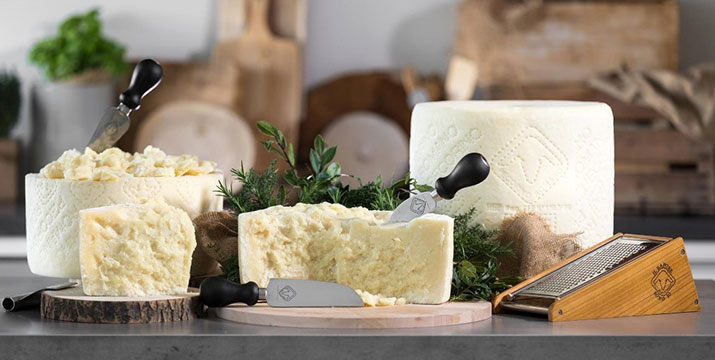
Pecorino and its countless tastes and flavors
There are various types of pecorino, which differ in production technique, size, aging and organoleptic characteristics. The main varieties are:
- pecorino romano
- pecorino toscano
- pecorino sardo
- pecorino siciliano
What does pecorino taste like? Each has its own unique flavor: Pecorino Romano has a distinct aroma and spicy taste, Pecorino Sardo has a floral flavor, Sicilian is often eaten fresh, while Tuscan is known for its sweet taste and milky fragrance when fresh, while it is more intense and structured when aged. Sometimes, pecorino can be further enriched with the addition of various spices such as fresh herbs, hot peppers, black pepper, peppercorns, walnuts or other more refined ingredients: pistachios, truffle, saffron, red wine and even grappa.
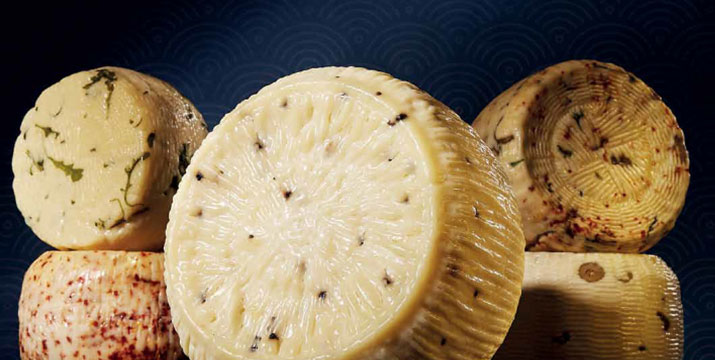
The aging of pecorino cheeses
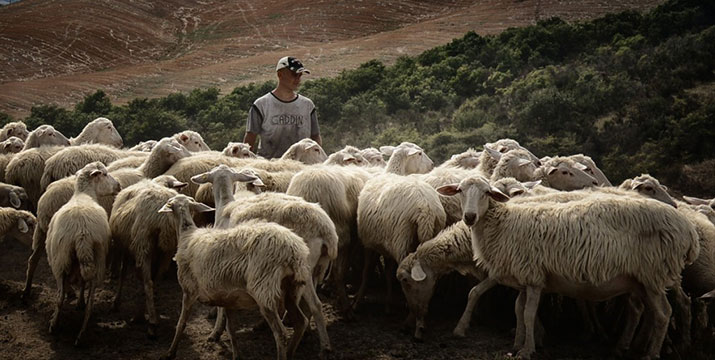
The secret of pecorino cheese lies in its traditional production and aging methods. The centuries-old production tradition is based on the cheesemaker's experience and the quality of fresh milk from free-range sheep fed on natural pastures. Mild climate, light sirocco wind, warm sun, fresh herbs and flowers make sheep's milk of high qualitative value and give personality to the cheese. Furthermore, a particular aging in natural caves gives these cheeses a rare value that is found in their organoleptic, olfactory and taste characteristics.
There are no industrial processes in the production of pecorino cheeses, no feed or pasteurized milk, no common taste. There are only "extraordinary sheep" and "extraordinary people" who produce "extraordinary cheeses" respecting nature and the environment.
Did you know that sheep produce about 150 liters of milk per year, as much as a cow in a week? This could explain why it costs more than other cheeses.
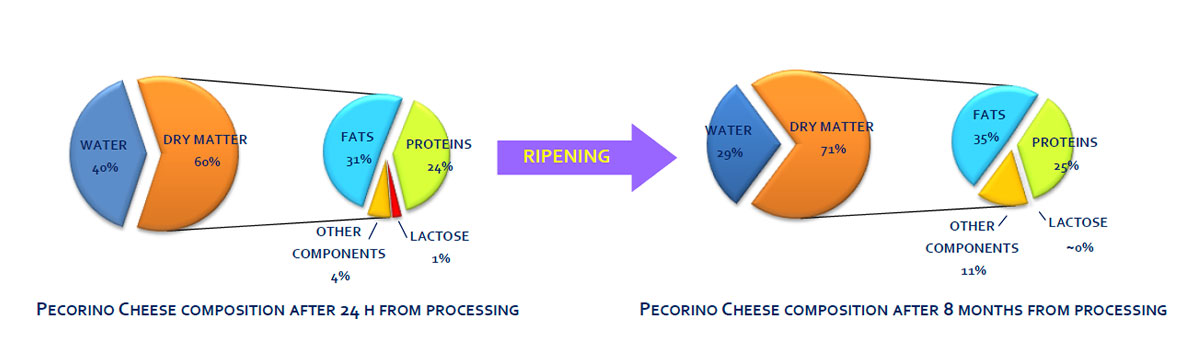
Pecorino cheeses: a source of energy without lactose and easy to digest
What are the properties and benefits of sheep cheeses? Sheep's milk is much more nutritious than cow's or goat's milk; it is the milk with the highest concentration of proteins useful for those who want to build good muscle mass. Although it contains a high level of butyric fat, it contains less saturated fat than cow's or goat's milk. The fats contained in sheep's milk are monounsaturated and polyunsaturated, both "essential" fats that are good for our body. Sheep's milk also contains numerous medium-chain triglycerides that help the body reduce cholesterol levels.
Sheep's milk has a lower amount of lactose than cow's milk, making it a particularly useful milk for all those people with lactose intolerance. A recent study has shown that there is almost no lactose in medium and long-aged cheeses, as "it constitutes an elective fermentation substrate for lactic acid bacteria both during the milk transformation process and during the cheese maturation phase".
(Source: https://www.pecorinotoscanodop.it/consigli/intolleranze-alimentari/)
Prof. Gavino Sanna of the Department of Chemistry and Pharmacy of the University of Sassari confirms that the absence of lactose is a natural consequence of the Pecorino Romano cheese production process. It contains galactose in quantities less than 2.7 mg / kg) and can be safely consumed by people suffering from galactosemia (without galactose) or lactose intolerance (being lactose-free).
Sheep's milk is naturally rich in calcium which helps keep bones healthy and strong and in magnesium. Sheep cheese contains a good amount of vitamin D useful for optimizing calcium and phosphorus metabolism and helps prevent type 2 diabetes, insulin resistance, hypertension, heart attack, congestive heart failure and stroke. Furthermore, it is rich in vitamin A and vitamin E with antioxidant power.
Guaranteed Quality – Protected Designation of Origin (PDO) for Pecorino
In Italy we have 8 pecorino cheeses with Protected Designation of Origin (PDO) status recognized by the European Union which certifies the highest quality guaranteed by their territory of origin. Furthermore, the PDO label protects cheeses from imitations and counterfeits and guarantees the purchase of a local and authentic product.
How to recognize PDO pecorinos? In order to provide the means for unmistakable identification, each Consortium for the protection of pecorino cheese has devised a particular labeling system. Each cheese wheel is marked with the designation and its logo, the producer's initials and the production date:
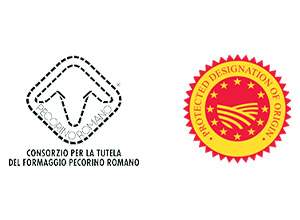
A diamond with rounded corners containing the stylized head of a sheep is a collective logo that identifies Pecorino Romano PDO.
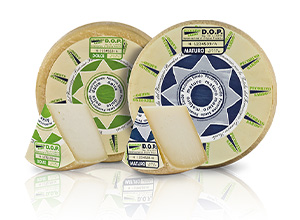
A green label for Pecorino Sardo Dolce, a blue mark for Pecorino Sardo Maturo
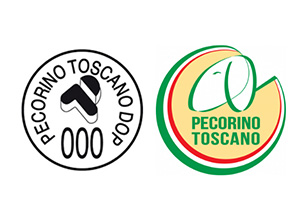
Pecorino Toscano PDO cheese has two marks: one to be applied in ink on the wheels and on the packaging in case of portioned cheese and the second to be affixed on the labels
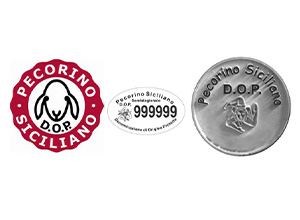
On each wheel of Pecorino Siciliano PDO we find the specific mark of the establishment (EC stamp) and the mark at the origin of the Denomination. The casein matrix bears the inscription "Pecorino Siciliano PDO", the type of aging: fresh, semi-aged and aged, and inside the image of the Trinacria. Furthermore, the aged cheese bears the brand stamped with fire. Each cheese package instead bears a red crown-shaped label with the identifying logo and the inscription Pecorino Siciliano PDO. Inside the logo, in the upper part of the circle with a white background, a stylized black sheep's head is depicted.
How to enjoy Pecorino?
In the kitchen, pecorino cheeses can be enjoyed in various ways throughout the day, ideal as an ingredient for a quick lunch, for snacks, to take on outdoor trips, and to serve at dinner with friends. It depends on the aging period which can last from two weeks to more than a year. We can find different types of pecorino: fresh, semi-aged and aged (mature) with a more distinct and spicy taste.
Fresh pecorino can be considered a table cheese and can be served alone with a slice of fresh bread or as an appetizer together with cold cuts, if aged it is used grated or in flakes to enrich the taste of many traditional Italian dishes such as pasta, soups, sauces, salads, risottos and pizza. Pecorino Romano, in particular, is an excellent ingredient for preparing pesto. Among the most delicious combinations to pair with pecorino cheeses we find onion compote, figs, mustard, honey, walnuts and olives. But its best accompaniment always remains a glass of good white or red wine. Fresh cheese pairs well with dry white wine such as Vermentino, while aged cheese pairs well with more structured red wines: Cannonau di Sardegna or Brunello di Montalcino.
Spaghetti alla Carbonara – recipe with grated Pecorino Romano PDO
Do you know which famous recipe uses pecorino? Discover with us how to cook Spaghetti alla Carbonara thanks to this unique authentic Italian recipe that involves the use of pecorino romano cheese and guanciale:
Ingredients (for 4 people)
- 400 g of spaghetti
- 4 egg yolks
- 200 g of guanciale
- 80 g of grated Pecorino Romano PDO
- 2 tablespoons of extra virgin olive oil
- salt and pepper to taste
Preparation
First, bring water to a boil for cooking the spaghetti, adding a little salt. In a large pan, brown the pancetta with the two tablespoons of oil and when it is nice and crispy, turn off the heat. Separately, in a large bowl (which will then contain the spaghetti), beat the egg yolks with the Pecorino Romano and a pinch of salt. When the spaghetti is cooked al dente, drain it, leaving it rather moist and pour it into the bowl with the egg; add the pancetta and a pinch of black pepper. Mix well to thicken the egg and serve immediately while hot.
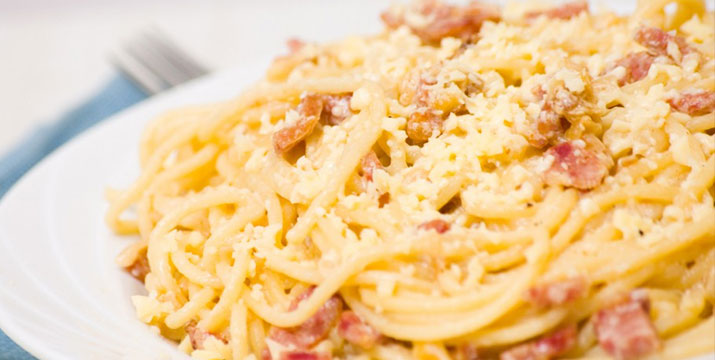
(Source: https://www.pecorinoromano.com/ricette/pasta-alla-carbonara)
Have we tempted your palate? Come and discover our range of traditional pecorino cheeses flavored with pears, figs, honey, Chianti DOCG wine, grappa, black pepper or with Bronte Green Pistachio PDO; or aged under juniper berries, pomace, black pepper, sheath, walnut leaves, olive leaves or hay. Do not hesitate to contact us for more information on our unique line of pecorino cheeses.