


Prosciutto di Parma is an Italian product of excellence, the result of a long tradition handed down for centuries. It is also protected by a consortium that guarantees its quality, authenticity and compliance with production stages. Below we present in more detail everything you need to know about Prosciutto di Parma, how to recognize it and how to best enjoy it.
The Prosciutto di Parma Consortium
It is the union of producers who use and respect the traditional production methods of Prosciutto di Parma. The consortium's main objective is to guarantee the quality of the raw material as well as compliance with all the stages that will give life to Prosciutto di Parma. Furthermore, it is responsible for the protection and promotion of Prosciutto di Parma both in Italy and abroad. For example, the consortium ensures the protection of the "Prosciutto di Parma" denomination and its trademark (Ducal Crown) throughout the world and suppresses any illicit use.
(source: https://www.prosciuttodiparma.com/pdf/it_IT/cartella-stampa-IT.pdf)
What distinguishes it from cured ham?
Today the consortium has 150 members, all of whom are based in the production area. Prosciutto di Parma is in fact one of the Italian products to which the Protected Designation of Origin (PDO) has been recognized, which indicates that a true Prosciutto di Parma must be produced in specific areas, through specific phases and using certain types of raw materials. The combination of geographical, human and natural factors (such as local traditions handed down over the years, the climate which is essential for the drying and aging phase...) influences the quality and typical characteristics of the product. All this differentiates Prosciutto di Parma from other hams, in addition to its sweetness and specific flavor.
"An essential condition for obtaining Prosciutto di Parma is that the entire processing takes place in the "typical area": an extremely limited area comprising the territory of the province of Parma located south of the Via Emilia at a distance of at least 5 km from it, up to an altitude of 900 m, bordered to the east by the Enza river and to the west by the Stirone stream."
(source: https://www.prosciuttodiparma.com/pdf/it_IT/cartella-stampa-IT.pdf)
Prosciutto di Parma: how is it made?
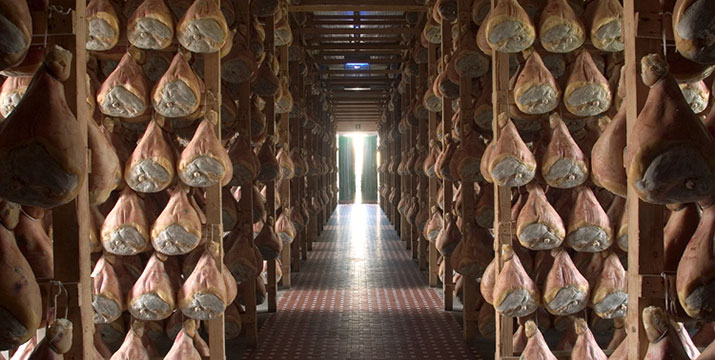
As we can also read on the Prosciutto di Parma website, there are 10 essential production phases:
- Selection To select the pig, whose leg will then become Prosciutto di Parma, specific checks are carried out regarding the area of origin, breed, age (over 9 months), weight (on average 160 kg). Once the presence of these characteristics is ensured, the pig, having fasted for 15 hours, can be sent for slaughter.
- Cooling The leg is left to rest in cooling cells for one day until it reaches a temperature of 0°. During this period of time the leg loses about 1% of its initial weight. It is important to emphasize that cooling is the only preservation treatment, without any addition of colorants or preservatives during the production cycle.
- Trimming Part of the fat and rind are removed to give the leg its typical shape and to facilitate subsequent phases.
- Salting During this phase the rind part is covered with moist salt, while the lean parts are coated with dry salt. It is important that the leg has a uniform temperature so that the salt is absorbed perfectly. The legs then rest in a cold room (the temperature must be between 1°C and 4°C, humidity around 80%) for six to seven months. Then the excess salt is removed and the legs are covered again with a thin layer of salt. They then return to a cold room for 15/16 months. Here the legs slowly absorb the salt and lose part of their moisture.
- Resting Once the excess salt is removed, the legs spend 60 to 80 days in a "resting" room where temperature and humidity levels are controlled.
- Washing and drying The legs are now washed with hot water. The drying process, which lasts a week, takes place using environmental conditions (if the climate is too cold or humid, the legs are placed in special dryers).
- Pre-aging – trimming For another three months the legs are hung on the traditional "scalere", in large rooms with numerous windows that are opened and closed based on internal and external humidity levels.
- Greasing Some parts of the leg are covered with a mixture of minced pork fat, salt and pepper (the sugna) so as to allow further moisture loss while at the same time the superficial muscle layers do not dry too quickly.
- Aging At this point the legs are transferred to rooms where aging takes place for the next 12 months. During this period the legs will develop the typical taste and aroma of Prosciutto di Parma.
- Testing and branding "In this phase a horse bone needle is inserted at various points of the muscle mass, a material that has the peculiarity of absorbing the aromas of the product and then releasing them very quickly. The needle is "sniffed" by experts trained to recognize and evaluate the olfactory characteristics, to establish the good progress of the production process and compliance with the peculiar sweetness. After a minimum of twelve months, and after appropriate checks carried out by the Inspectors of the Parma Quality Institute, including testing with the horse bone needle, the fire brand "5-pointed crown" is affixed."
(source: https://www.prosciuttodiparma.com/pdf/it_IT/cartella-stampa-IT.pdf)
How to recognize Prosciutto di Parma
Prosciutto di Parma is easily recognizable by the presence of the brand, fire-branded, which depicts a five-pointed crown with an oval base. In addition to this, other brands are also used to guarantee the quality and origin of Prosciutto di Parma.
First of all, the breeder places an indelible tattoo on both legs of the pig with: breeder identification code and date of birth of the animal.
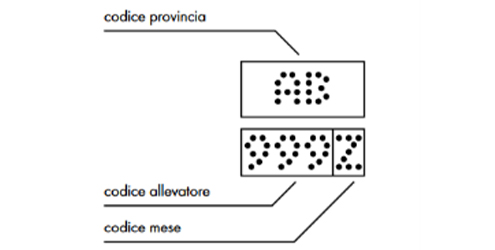
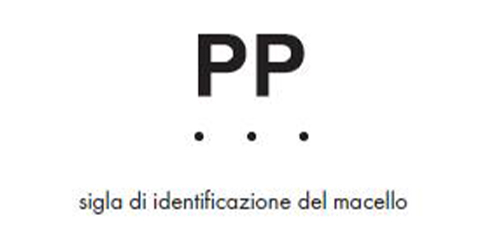
The slaughterhouse then brands the leg with the initials PP – Prosciutto di Parma, together with the slaughterhouse identification code.
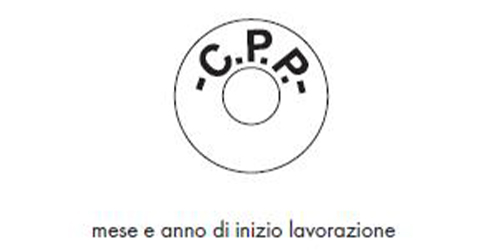
Then a metal seal is affixed with the initials C.P.P. (Consorzio Prosciutto di Parma) and the aging start date.
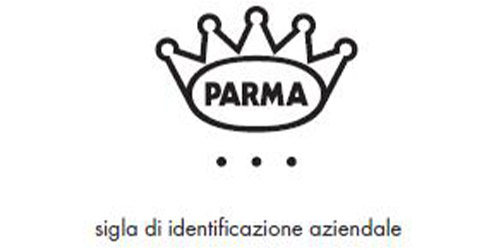
Finally, the five-pointed crown with the producer's identification code is affixed to the Prosciutto di Parma. This symbol has two main functions: identification and guarantee of authenticity.
Many ways to enjoy Prosciutto di Parma
In the kitchen, especially nowadays, people are increasingly creative in creating new dishes or reinventing old recipes. Prosciutto di Parma can be an excellent ingredient for many
preparations, so as to be appreciated at its best in all its facets.
It is also important that the consumer, especially abroad, is aware of the quality and tradition that a product like this has carried with it for decades. For us Italians, the use and consumption of cold cuts is almost taken for granted, but it is not equally taken for granted in many other countries and it is therefore good to convey some simple rules:
- Prosciutto di Parma (like many other cured meats) is cut into thin slices almost like a sheet;
- It should not be cooked in a pan like a steak (at most the thin slices can be made crispy in various ways, as we will see shortly);
- The fatty part should not be completely discarded... it is precisely that which makes this cured meat tasty. Below we propose some recipes taken from the Prosciutto di Parma websitehttps://www.prosciuttodiparma.com/
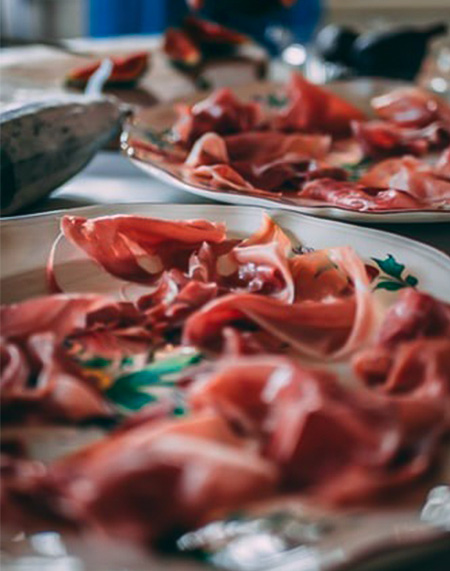
The simplest way to enjoy Prosciutto di Parma is to serve it as an appetizer (together with other typical cured meats), cheeses and pickles or as an aperitif wrapped around breadsticks.
A typically Italian summer dish is prosciutto and melon, which combines two apparently discordant flavors that actually go perfectly together.
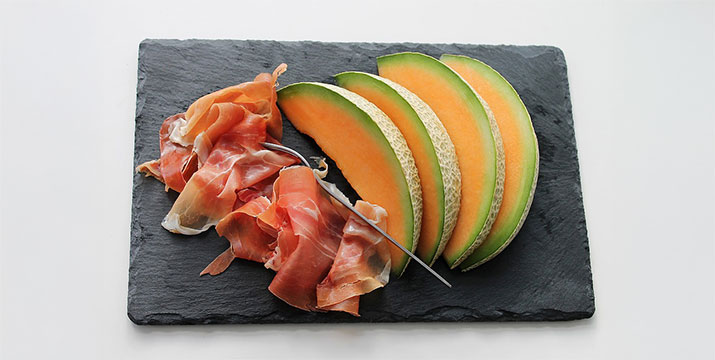
Sometimes, thin slices of Prosciutto di Parma are rolled around certain types of fish or meat and baked in the oven. Below are two recipes, taken from the list in the dedicated section of the Prosciutto di Parma website:
Chicken breast wrapped in Prosciutto di Parma stuffed with ricotta and aromatic herbs:https://www.prosciuttodiparma.com/it_IT/cucina/ricette?r=622
Seared scallops with Prosciutto di Parmahttps://www.prosciuttodiparma.com/it_IT/cucina/ricette?r=596
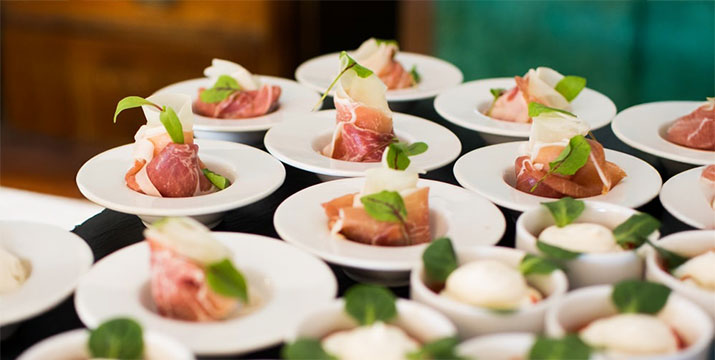
These are just a few examples of the many possible recipes you can experiment with at home in your kitchens. Let yourself be inspired by the taste, aromas and flavors of Prosciutto di Parma to create new dishes. Do not hesitate to contact us for any further information!